Sunday, 9 April 2023

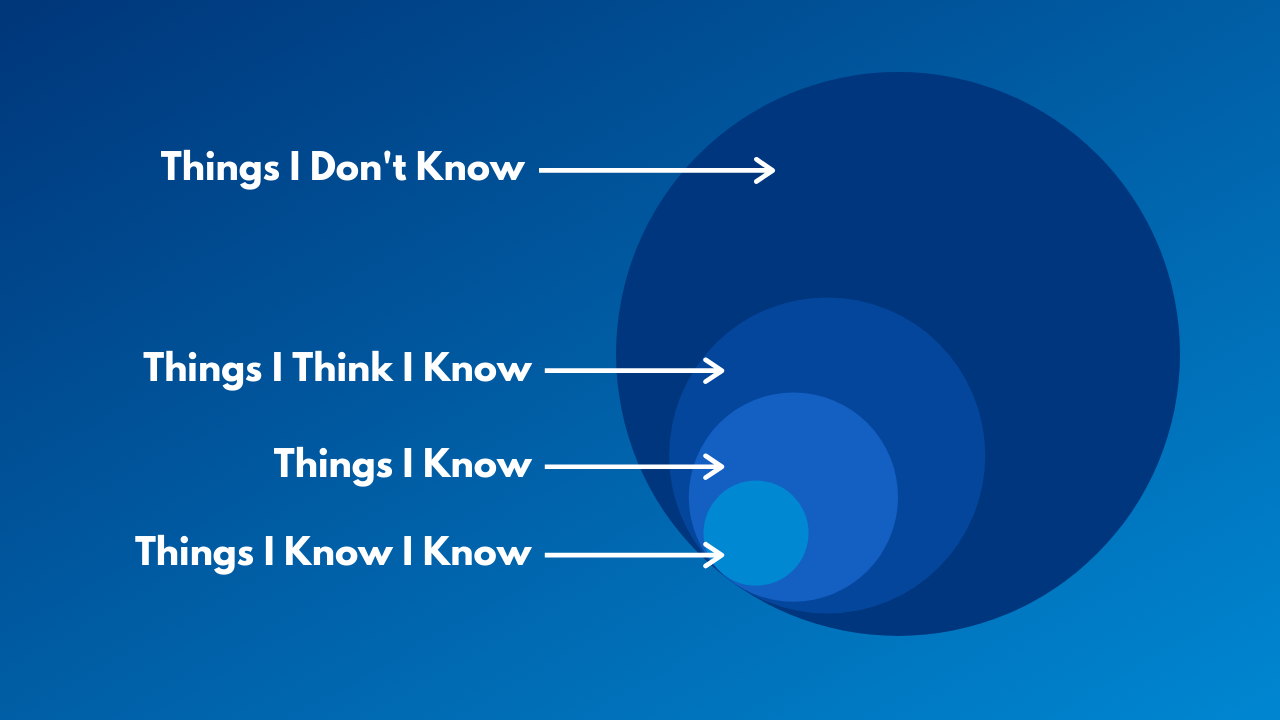
[09042023] Admitting not knowing is good, willing to learn is divine


A powerful statement that speaks to the importance of humility, open-mindedness, and a growth mindset. When we acknowledge that we don't know everything, we create the space to learn and grow. This willingness to learn and grow is what leads to true excellence and the ability to reach our full potential.

If we think we know everything, we limit ourselves and our potential. We become closed off to new ideas and perspectives, and we may miss out on opportunities for growth and improvement. On the other hand, if we approach life with a willingness to learn and grow, we open ourselves up to new ideas and possibilities.

By preparing ourselves to learn, we create the foundation for growth and development. This may involve seeking out new experiences, taking courses or workshops, reading books or articles, or seeking out mentorship or guidance from someone with more experience.

When we embrace the idea that "prepare to learn is divine," we position ourselves for success and personal growth. We become more resilient, adaptable, and open-minded, which are all essential qualities for achieving our goals and reaching our full potential.

In short, acknowledging that we don't know everything and being willing to learn and grow is key to unlocking our full potential. By adopting a growth mindset and preparing ourselves to learn, we can achieve great things and live more fulfilling lives

Saturday, 8 April 2023

[08042023] Don't throw stones if your house is made of glass

The proverb "Don't throw stones if your house is made of glass" is a warning against criticizing or attacking someone else when you are vulnerable to criticism or have faults of your own. It suggests that before we criticize others, we should ensure that we are not susceptible to similar or worse criticisms.

Metaphorically, the proverb refers to the fact that if you live in a glass house, throwing stones at someone else's house will likely result in your own home being damaged. Similarly, if you have vulnerabilities or faults, attacking others may result in them pointing out your own flaws.

So what can we learn from this proverb, and how can we apply it in our daily lives?

Firstly, we should be mindful of our own behavior and actions before criticizing others. It's easy to fall into the trap of pointing out someone else's faults without considering our own. By taking a step back and reflecting on our own behavior, we can avoid being hypocritical or judgmental.

Secondly, we should focus on self-improvement and personal growth. Instead of criticizing others, we should focus on our own areas of improvement. By acknowledging our own faults and working to improve them, we can become better people and set a positive example for others.

Lastly, we should avoid being defensive or dismissive when others point out our own faults. If someone points out a flaw in our behavior or actions, we should take it as an opportunity to grow and improve. Being defensive or dismissive will only make us appear insecure and unwilling to learn.

In conclusion, the proverb "Don't throw stones if your house is made of glass" reminds us to be mindful of our own behavior and to avoid being hypocritical when dealing with others. By focusing on self-improvement and personal growth, we can become better people and create a more positive and supportive world

Friday, 7 April 2023

[07042023] The Power of Empathetic Communication: Seek First to Understand to Be Understood


Effective communication is essential for building meaningful relationships, whether in our personal or professional lives. One of the most powerful principles of communication is to seek first to understand before being understood. By taking the time to truly listen and empathize with others, we can create stronger connections, avoid misunderstandings, and achieve better outcomes.

When communicating with others, it's important to be clear and concise, use examples, show interest, be respectful, use nonverbal cues, be open-minded, and take turns. By combining these strategies with the principle of seeking to understand first, we can become better communicators and create more fulfilling relationships.

However, there may be times when it feels like a waste of time to convince those who don't want to listen or understand our perspective. In these situations, it's important to recognize the value of continuing to communicate in a respectful and empathetic way, even if we don't ultimately succeed in changing the other person's mind.

At the same time, it's also important to set boundaries and recognize when it's time to disengage from a conversation or relationship that is consistently unproductive or harmful. By communicating our position and our reasons for disengaging in a firm and respectful way, we can still maintain our own values and dignity while also preserving the possibility of future communication.

Ultimately, the power of empathetic communication lies in its ability to create deeper connections and foster mutual understanding. By seeking to understand first and communicating in a way that is respectful and empathetic, we can build bridges of empathy and trust that allow us to communicate more effectively and achieve our goals more successfully, even in challenging situations where convincing others may not be possible.

[07042023] Tafsir?

Berlebih2an Pentafsiran Perkara Ghaib!

= melayan sangkaan dan andaian. Sedangkan kita tahu bahawa sangkaan (dzon) ada yang baik namun BANYAK yang buruk

= membelakangkan fakta, bukti dan logik akal. Sedangkan kita tahu bahawa dalil akli serta nakli adalah jalan menuju kebenaran

= pembenihan khurafat serta pencambahan syirik. Sedangkan kita tahu bahawa penggantungan terhadap selain daripada Allah SWT akan MEMBATALKAN IMAN

= membakar hasad dan dengki. Sedangkan kita tahu bahawa hasad serta dengki (al-hiqdu wa al-hasadu) membakar jantung (al-qalb) sepertimana bara memakan kayu api

= membuak perbandingan dengan sesuatu yang diluar jangkaan kita. Sedangkan kita tahu untuk mengukur baju di badan sendiri, tahu bersyukur pada pemberian Ilahi.

Pendek kata, carilah ketenangan dengan minimumkan pentafsiran terhadap perkara ghaib!

Wallahu a'lam!

Tuesday, 4 April 2023

[04042023] Listers vs Solvers


Problem listers and problem solvers have fundamentally different approaches to problem-solving. Problem listers tend to focus on the negative aspects of a situation and may blame others for the problems they identify, whereas problem-solvers actively seek out solutions and take personal responsibility for finding ways to overcome obstacles.


While both approaches have their place, adopting a problem-solving mindset is generally more effective. By focusing on finding solutions and taking proactive steps to address issues, individuals can take control of the situation and create positive change. This can lead to greater feelings of empowerment and self-efficacy and ultimately result in more successful outcomes.


When faced with a problem, it can be helpful to take a step back and assess whether you are approaching the situation as a problem lister or a problem solver. If you are stuck in a cycle of complaining or blaming others, try reframing your thinking and focusing on finding solutions. By doing so, you can take control of the situation and create positive change in your life.

Monday, 3 April 2023

[03042023] The Power of Less Talk, More Suspense: How to Craft a Compelling Narrative

In today's fast-paced world, it's important to capture your audience's attention quickly and keep them engaged throughout your narrative. One way to do this is by using the power of less talk, more suspense. By using concise and impactful language and building up suspense and anticipation, you can create a compelling narrative that captivates your audience and keeps them coming back for more.

Here are some tips for crafting a compelling narrative using the power of less talk and more suspense:

  1. Start with a hook: Begin your narrative with a powerful hook that grabs your audience's attention and makes them want to keep reading. This could be a shocking statement, a surprising fact, or a tantalizing mystery that sets the stage for the rest of your story.

  2. Use concise language: Be careful not to overwhelm your audience with too much information or too many details. Instead, use concise and impactful language that conveys the most important aspects of your story in a clear and memorable way.

  3. Build suspense: Use foreshadowing, misdirection, and other techniques to build suspense and keep your audience guessing. By withholding information and delaying the resolution of a conflict, you can create tension and excitement that keeps your audience engaged and eager to learn more.

  4. Reveal secrets slowly: Use hints and clues to gradually reveal secrets and mysteries throughout your narrative, keeping your audience guessing and intrigued. By delivering these revelations slowly and strategically, you can create a sense of anticipation and excitement that leads to a satisfying resolution.

  5. Create emotional connections: Finally, use the power of storytelling to create emotional connections with your audience. By using relatable characters, evocative descriptions, and powerful themes, you can create a narrative that resonates with your audience and leaves a lasting impression.

In conclusion, the power of less talk, more suspense is a powerful tool for crafting a compelling narrative that captures your audience's attention and keeps them engaged throughout. By using concise language, building suspense, and revealing secrets slowly, you can create a narrative that resonates with your audience and leaves a lasting impression. So the next time you're crafting a story, remember the power of less talk and more suspense, and watch as your audience becomes captivated by your narrative.

[03042023] Yesterday I was clever. I wanted to change the world. Today I am wise. I want to change myself. -poet Rumi

Life is an ever-flowing river, moving forward with or without us. We are often faced with the choice of whether to swim against the current or let go and follow the flow. Both options have their own unique advantages, and the decision of which to choose ultimately depends on the situation we find ourselves in.

In the pursuit of changing the world, it's important to recognize that personal growth and self-improvement are essential. As the Persian poet Rumi once said, "Yesterday I was clever. I wanted to change the world. Today I am wise. I want to change myself." By focusing on our own growth and development, we become better equipped to make meaningful contributions to the world around us.

However, this process of personal growth and self-improvement is not always easy. Sometimes, it requires us to swim against the current, to work hard and push ourselves outside of our comfort zones. This can be a challenging and difficult journey, but it is often necessary in order to achieve our goals.

On the other hand, there are also times when it is wiser to let go and follow the flow of life. By surrendering to the journey and allowing ourselves to be carried by the current, we can reduce stress and find inner peace. This allows us to be open to new experiences and opportunities, and to discover new paths that we may not have otherwise considered.

Ultimately, the choice of whether to swim against the current or follow the flow is ours to make. However, regardless of which path we choose, it's important to remember that life will continue to move forward. By embracing personal growth and self-improvement, we can become better equipped to navigate the currents of life and make a positive impact on the world around us

[12112026] NILAI SEORANG INSAN: SEBAIK-BAIK MANUSIA ADALAH YANG PALING BERMANFAAT

✨ NILAI SEORANG INSAN: SEBAIK-BAIK MANUSIA ADALAH YANG PALING BERMANFAAT ✨ Islam mengukur darjat dan kemuliaan seseorang bukan...